

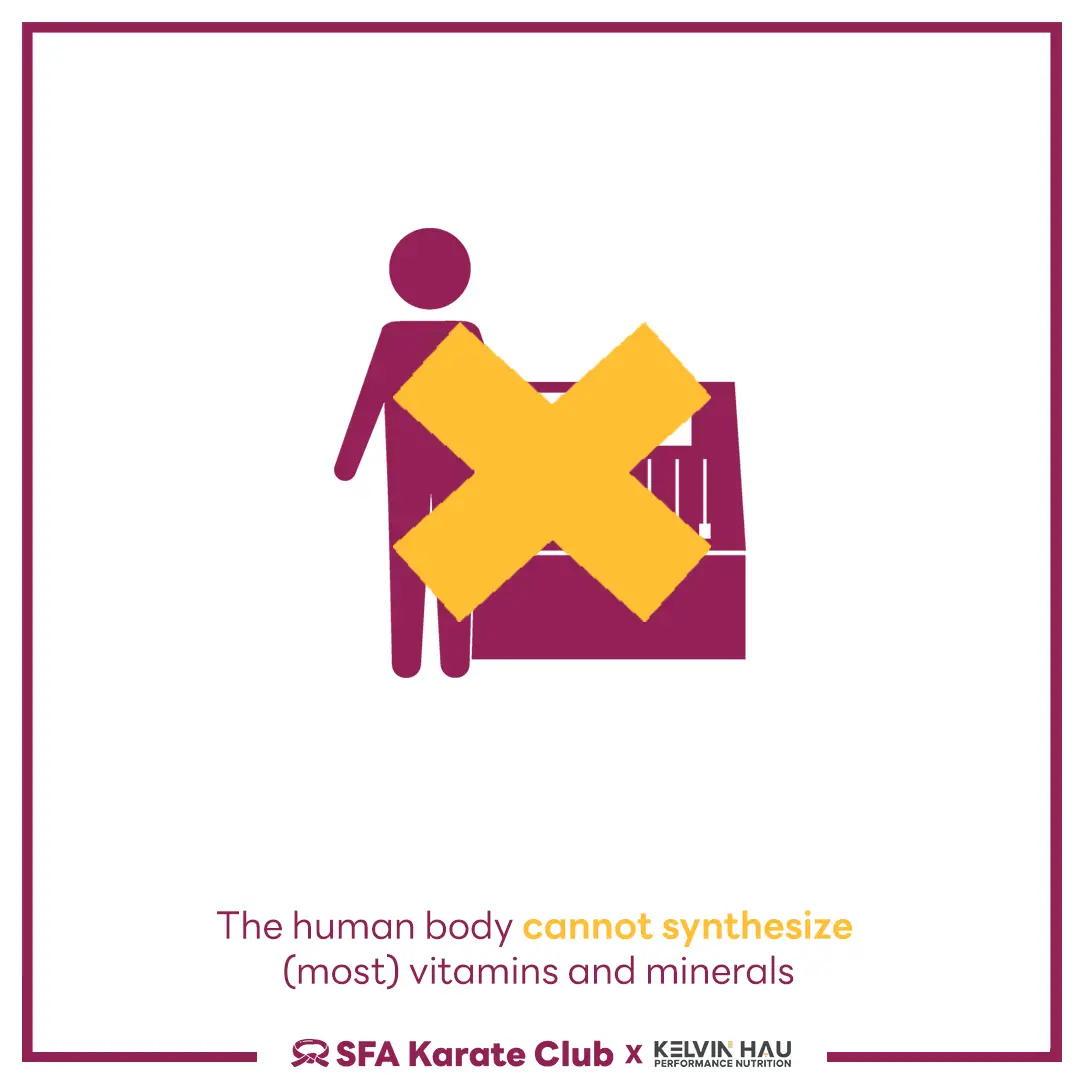

- Human body cannot synthesize (most) vitamins and minerals, so they must be ingested from different foods
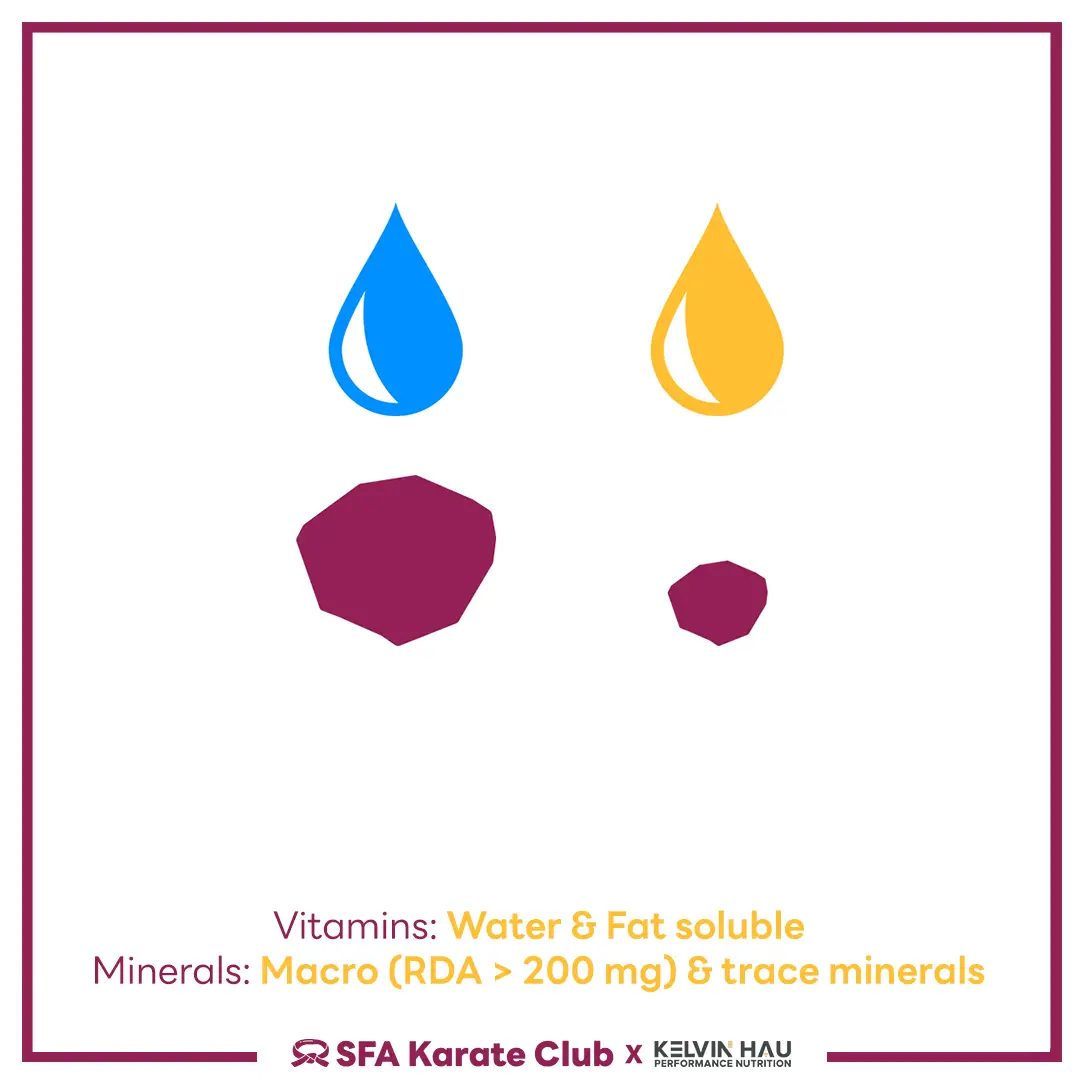
- Vitamins are divided into two types: fat-soluble (A, D, E, K) and water-soluble (B group, C). Minerals can be subdivided into macro-minerals (RDA > 200 mg) and trace minerals
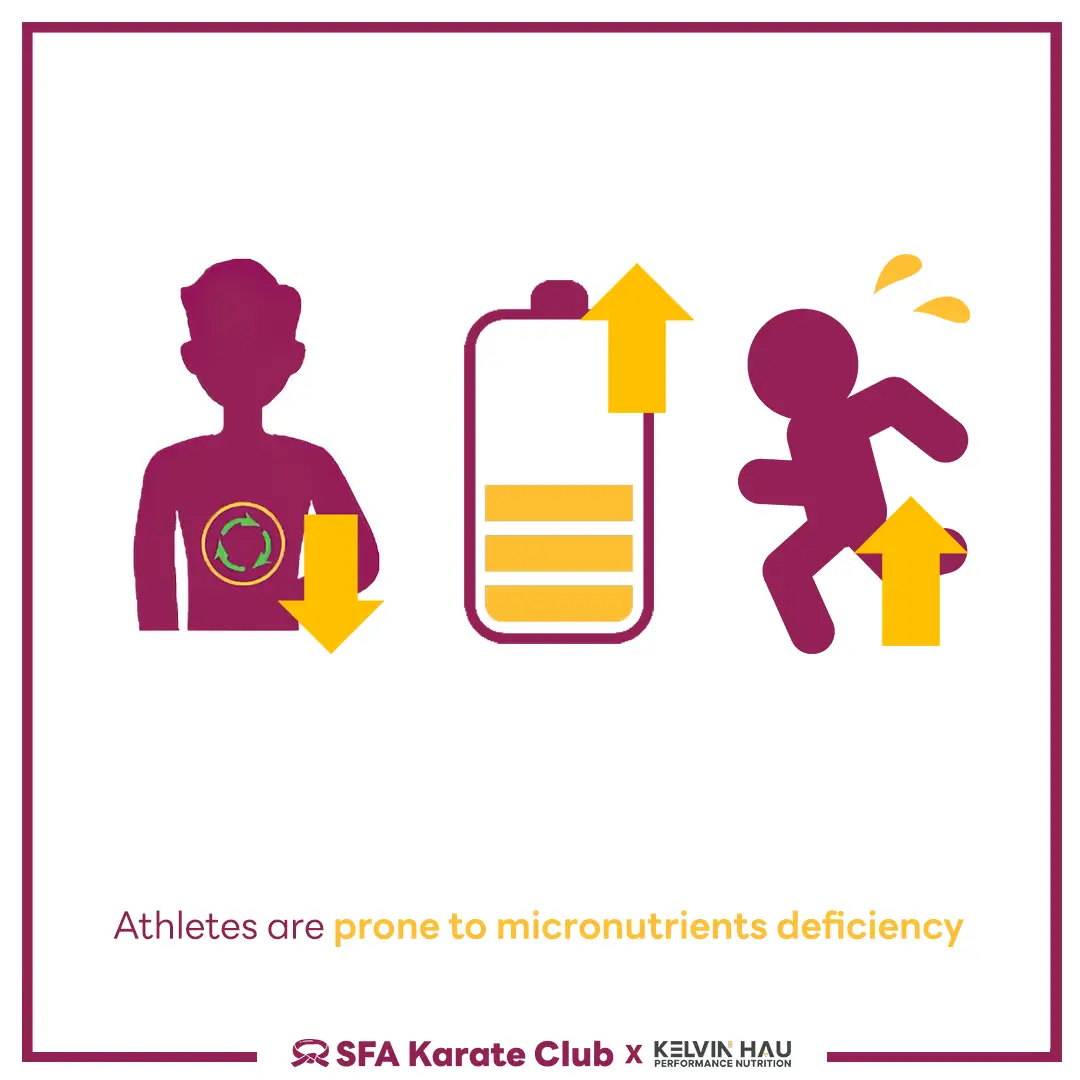
- Athletes are prone to micronutrients deficiency: Decreased gastrointestinal absorption, Increased consumption of vitamins in the body, increased energy expenditure, increased vitamin excretion, sweating profusely in a hot environment
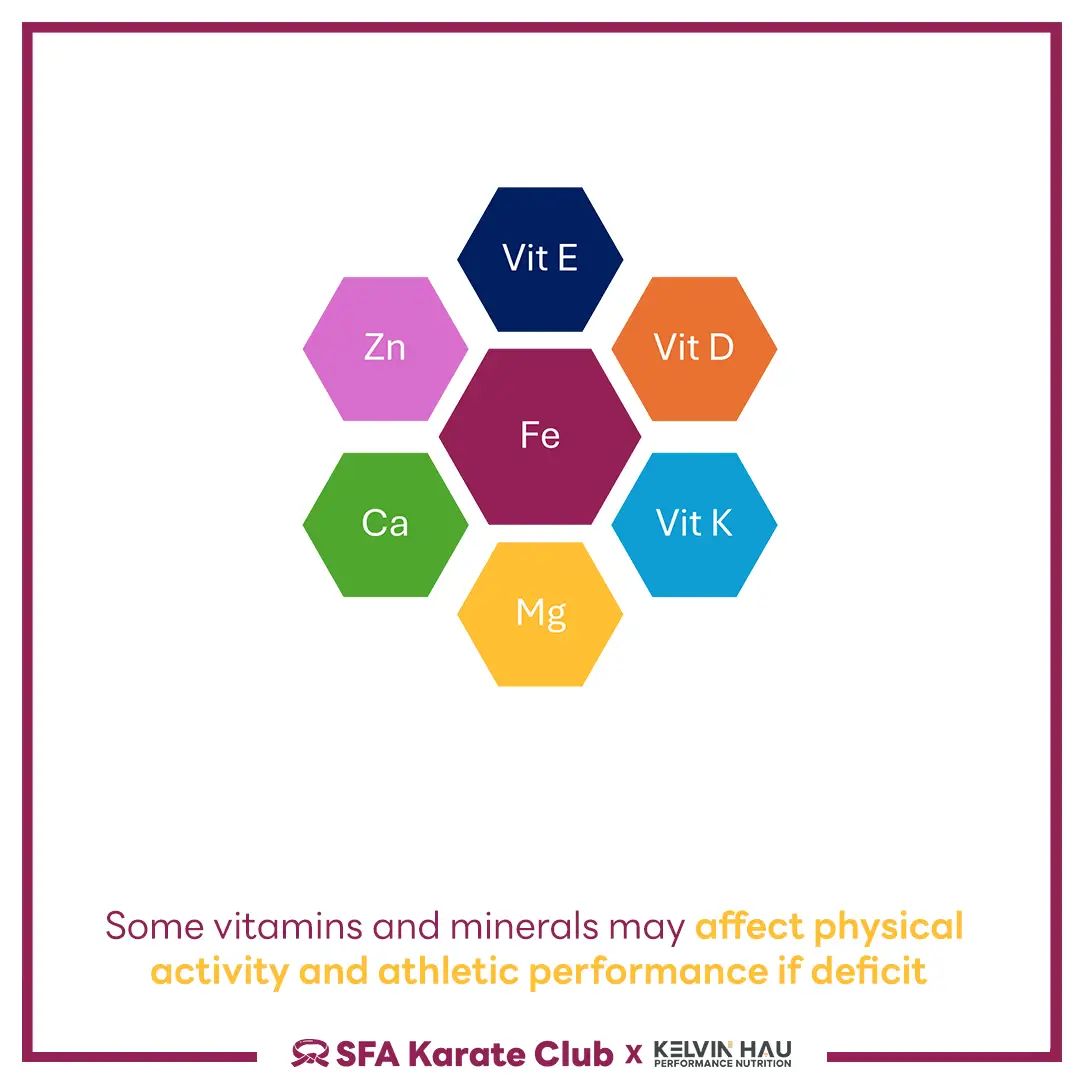
- Some vitamins and minerals may affect physical activity and athletic performance if deficit
- Athletes need to ensure they consume enough micronutrients to improve their physical activity and performance. A balanced diet that includes a variety of fruits, vegetables, whole grains, and lean proteins may help them meet their micronutrient needs.
Micronutrients & Performance
By Kelvin Hau, MSc RNutr SENR CISSN 1 min read